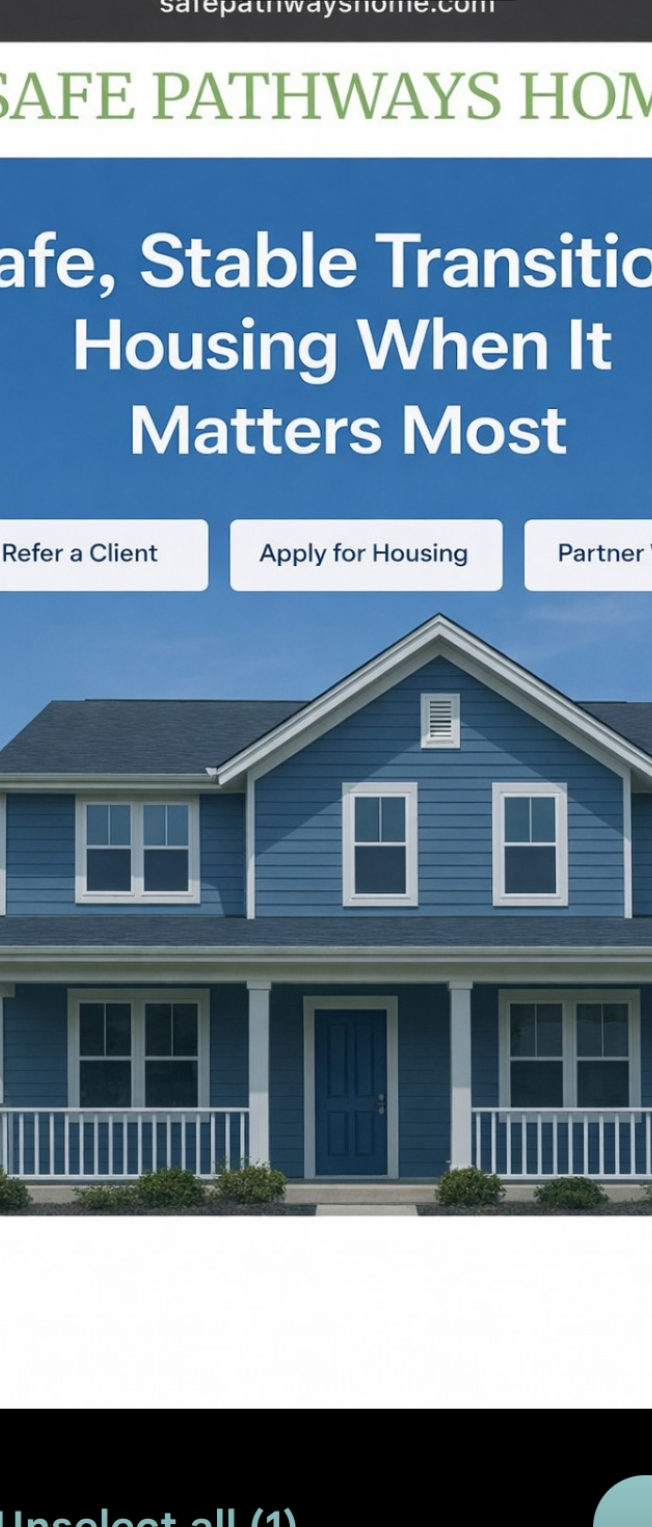
A Women’s Transitional Co-Living Home utilizing the CASA Method.
"A women's shared rental home with house rules and oversight."
ABOUT OUR SERVICES
The CASA Method™
A structured pathway to housing stability, dignity, and independence
The CASA Method™ (Community Access & Stabilization Approach) is a person-centered housing stabilization framework designed to support women experiencing housing instability through safe placement, structured support, and coordinated care.
Delivered through Safe Pathways Home, the CASA Method focuses on stability first, followed by accountability, life structure, and long-term self-sufficiency.
Housing is not the reward — it is the foundation.
The CASA Method™ is a non-clinical, housing-first aligned, stabilization model that bridges the gap between crisis and independence.
It is designed for:
-
Women transitioning from instability
-
Women referred by case managers or community partners
-
Women rebuilding after displacement, hardship, or transition
-
Women seeking structured, safe shared housing with accountability
The method emphasizes placement with purpose, not temporary shelter.
THE 4 PILLARS OF THE CASA METHOD™
1️⃣ Community Access
Residents are connected to appropriate community-based resources that support stabilization, including:
-
Case management referrals
-
Employment and income support
-
Benefit navigation
-
Community wellness services
CASA does not duplicate services — it coordinates access.
2️⃣ Accountability & Structure
Residents participate in a clearly defined housing structure that includes:
-
House guidelines and expectations
-
Participation requirements
-
Personal responsibility agreements
-
Respect for shared living environments
Structure creates safety — safety creates stability.
3️⃣ Stabilization First
The CASA Method prioritizes:
-
Safe housing placement
-
Consistent routines
-
Reduced stress environments
-
Clear expectations
Stabilization happens before long-term planning.
4️⃣ Autonomy & Sustainability
Residents are supported in building:
-
Independent living skills
-
Financial responsibility
-
Personal agency
-
Exit readiness toward independent housing
The goal is not dependency — it is prepared independence.
What We Do
Safe Pathways Home provides supportive shared housing for women who need stability while transitioning to permanent housing. We offer a safe, structured, women-only environment built on dignity, accountability, and support.
Who We Serve
Adult women exiting hospitals, homelessness, unsafe living situations, or major life transitions who need structured housing for 3–12 months.


Furnished housing
Enjoy fully furnished shared housing designed for comfort and convenience. Move in with ease and focus on your personal goals.
Our Homes
Clean, furnished women-only co-living residences with shared spaces, clear expectations, and on-site oversight.
What’s Included
Housing, utilities, daily routines, house management, care coordination, RN oversight, and transition planning.

FEES
Our Shared Room Program fees vary by room type and availability.
Contact us for openings.
✔ Fees may be paid by the resident or a coordinating agency
All program fees are inclusive of housing,
“Is this a group home?”
“It’s a women’s shared rental home with house rules and oversight. All residents are independent adults living together in a co-living arrangement. No medical care is provided.”

Case-manager-friendly
Our structure is designed to support case managers, facilitating seamless collaboration and support for residents.
CASE MANAGERS & REFERRAL AGENCIES
Safe Pathways Home partners with:
-
Case managers
-
Social service agencies
-
Outreach programs
-
Re-entry and stabilization services
Placement Process:
-
Submit referral
-
Intake screening completed
-
Bed availability confirmed
-
Move-in scheduled
-
Weekly or monthly invoicing issued
👉 Simple. Predictable. Professional.
Who We Serve
"Adult women exiting hospitals, homelessness, unsafe living situations, or major life transitions who need structured housing for 3–12 months."
Step 1: Referral or Self-Inquiry
Individuals are referred by community partners or inquire directly.
Step 2: Intake & Screening
Applicants complete a structured intake to assess:
-
Housing needs
-
Compatibility for shared living
-
Readiness for structured support
Step 3: Placement
Approved participants are placed into a Safe Pathways Home residence aligned with CASA standards.
Step 4: Stabilization Period
Residents focus on:
-
Routine
-
Compliance
-
Housing consistency
-
Personal grounding
Step 5: Transition Planning
Exit planning begins with a focus on:
-
Independent housing
-
Sustainable income
-
Ongoing community support
📜 HOUSE RULES
✔ Women-only residence
✔ Respect personal boundaries
✔ No romantic/sexual relationships in house
✔ No guests without approval
✔ Support peer safety & calm, cleanliness, routines, & respect.
-
No drugs or alcohol
-
No violence or threats
-
No overnight guests
-
Respect for shared spaces
-
Compliance with quiet hours
-
Cooperation with house expectations
Rules are framed as community standards, not control measures.
* No substances use!
Ideal Resident

Our ideal residents are those re-entering the community, experiencing temporary housing instability, or awaiting permanent placement. They are working, self-employed, or receiving benefits and can be referred by case managers or self-referred.
Housing Model
-
Stable transitional housing
-
Shared rooms (2 women per room)
-
Fully furnished home
-
Utilities, Wi-Fi, and laundry onsite
-
Structured environment with clear house rules
-
Case manager coordination.
House Expectations
We maintain clear house expectations to ensure a safe, quiet residential environment for all residents.
ELIGIBILITY REQUIREMENTS
Participants must:
-
Be an adult woman (+18)
-
Be non-violent
-
Have verifiable income OR active case management
-
Be able to live independently with structure
-
Agree to house rules and program expectations
-
Commit to a 3–12 month transitional stay
